Childhood and developmental wounds
When early years felt unsafe, unpredictable or lacking in care, the patterns can follow you into adult life. We work gently with those long-held survival responses so they no longer run the show.
Last updated:
Soul Counselling · Trauma Support · Hobart
If an old wound, a sudden shock, or hurt inside a close relationship still lives in your body as tension, alertness or numbness, you are not broken. These are survival patterns your nervous system learned. Christina offers calm, unhurried trauma support online and by phone across Hobart and Tasmania.
Book a free 15-minute assessment → Ask a question first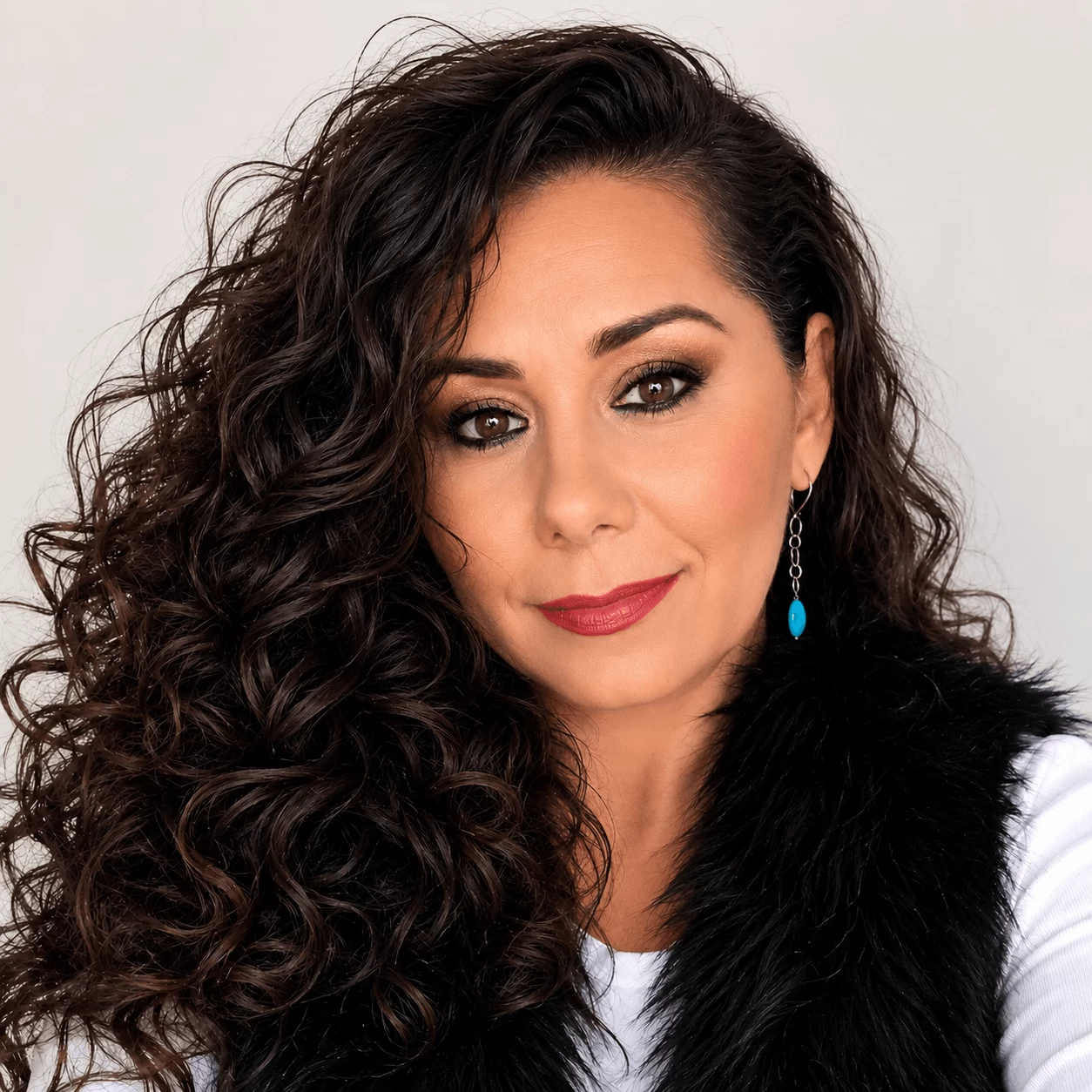
Research suggests around 75 percent of Australians live through a traumatic event at some point, and roughly 11 percent develop PTSD, though most people never go on to carry a lasting disorder. In Tasmania, the ABS National Study of Mental Health and Wellbeing for 2020 to 2022 found that about 19.8 percent of people aged 16 to 85, close to 88,700 Tasmanians, experienced a mental disorder in a single year.
Sources: ABS National Study of Mental Health and Wellbeing, 2020 to 2022; AIHW. Five-star Google reviews
One conversation in, most clients say they’ve finally been understood.
“I truly felt heard for the first time in all my life and deeply understood.”
“When I came to Christina I was drowning in darkness… now I’m finally thriving again.”
“Due to her mediumship I was able to see core issues that I wasn’t able to recognise before.”
In a long Tasmanian winter, with specialist trauma help scarce and often far away, those old feelings can settle in heavier. You do not have to carry them alone or on anyone’s timeline but your own.
How Christina works
This is not about reliving the worst moments or being talked into a breakthrough. It is steady, respectful work that helps your nervous system learn it is allowed to feel safe again. You stay in choice the whole way through.
Before anything else, we build a sense of steadiness. You decide what to share and what to leave for now. Nothing is forced, no detail is required, and we slow down or pause the moment things feel like too much. Feeling in control is part of the healing, not a detour from it.
Trauma lives in the body as much as the mind, so we gently notice what your system is holding, the tightness, the bracing, the shutdown. Working with those signals at a pace you set helps release what has been stuck, without dragging you back into the story before you feel ready.
Over time we look at the patterns underneath the reactions, the beliefs about safety, trust and worth that formed to protect you. As those roots soften, the triggers loosen their grip and you begin to feel more settled, more present and more like yourself.
Go deeper
Some people like to understand what is happening in their body and why they respond the way they do. Gentle, plain language articles on trauma, the nervous system and recovery can offer a quiet way to make sense of things at your own pace.
Read the trauma counselling blogThere is never any pressure to read anything. The work that matters happens in session, in your time.
What we can work through
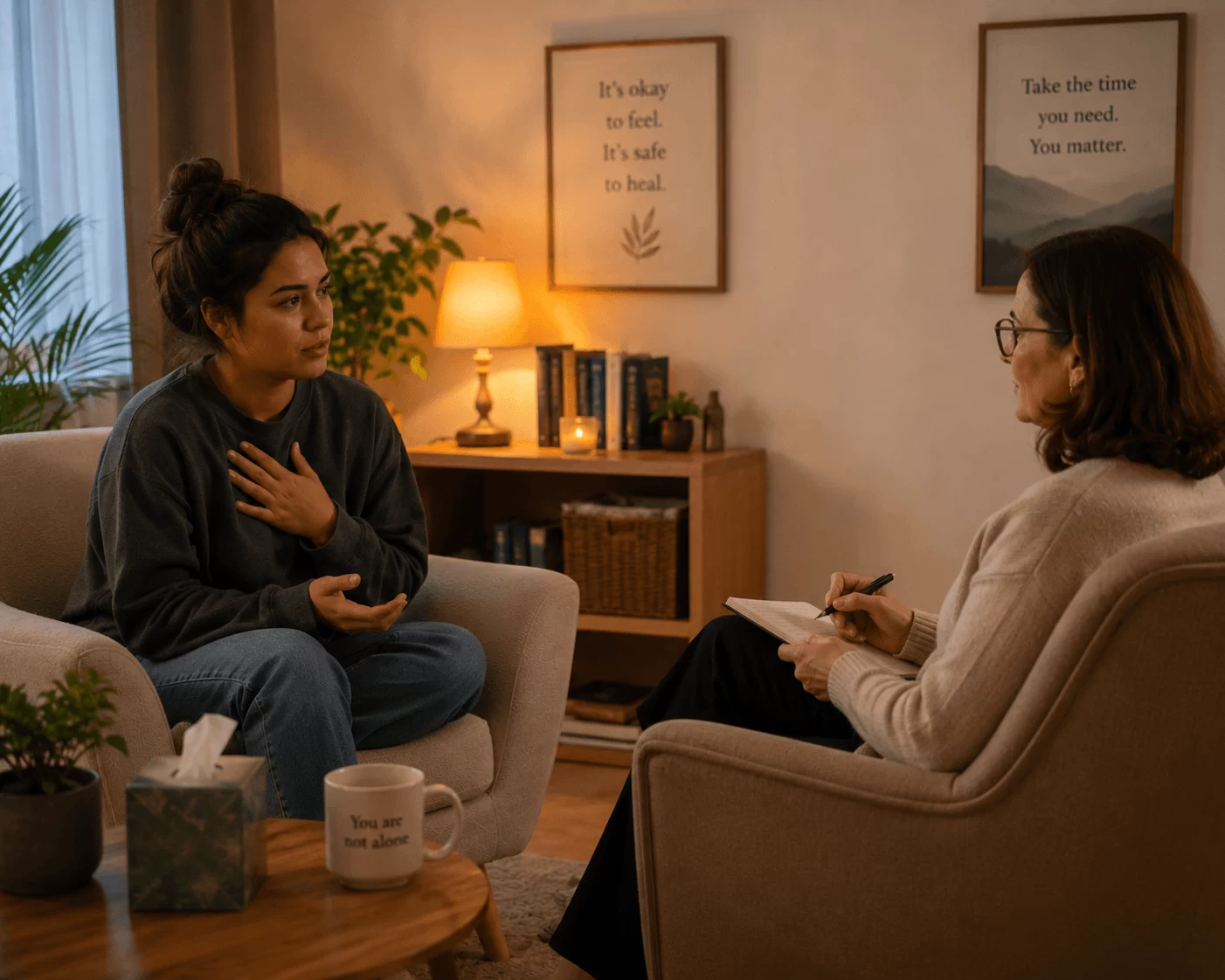
Trauma takes many shapes, and it does not have to be a single dramatic event to leave a mark. These are some of the experiences people bring to trauma counselling.
When early years felt unsafe, unpredictable or lacking in care, the patterns can follow you into adult life. We work gently with those long-held survival responses so they no longer run the show.
A crash, an assault, a medical emergency or a sudden loss can leave the body stuck in high alert long after the event. Paced support helps your system come down from that state and feel steady again.
Hurt inside close or intimate relationships can shake your trust in others and in yourself. We make room for that impact carefully, rebuilding a sense of safety and boundaries without rushing.
When difficult experiences repeated over time, the effects can feel tangled and layered. There is no need to unpick it all at once. We move slowly, one settled step after another, at a pace that respects you.
About Christina
Christina Feyes founded Soul Counselling in 2016 and has more than ten years of experience. She is a counsellor with training across psychology, social work and human services, and she works with people right across Australia by video and phone. She does not diagnose, prescribe or treat, and she will never push you faster than feels safe.
Her approach blends solid clinical understanding with warm, grounded counselling and a thread of intuitive insight. That means you get practical tools for daily life alongside space for the deeper layers, the parts of an experience that words alone do not always reach.
Common questions
If your question is not here, the free 15-minute assessment is the easiest way to ask it.
You can begin with a free 15-minute assessment, with no card details and no obligation, so there is genuinely nothing to lose by having a first conversation. It is a chance to see whether the support feels right for you before you decide anything. There is no pressure to continue, and you stay in control of every step from the very start.
No referral is needed. You can reach out directly and book your free 15-minute assessment whenever you feel ready. Christina is a counsellor rather than a psychologist, so you do not need a GP mental health plan or a referral letter to begin. If you already have supports in place, that is fine too, and counselling can sit alongside them.
There is no Hobart clinic. Christina’s only physical base is in Southport on the Gold Coast, and all Hobart and Tasmanian sessions are held online by video or phone. This means you can access trauma-informed support from anywhere in the state, including the CBD, Kingston, Glenorchy, the eastern shore or regional and rural Tasmania, without any travel.
Because local Tasmanian waitlists for trauma-informed help can stretch to six months or more, online counselling often means you can begin much sooner. Once you reach out, a free 15-minute assessment can usually be arranged without a long wait, so you do not have to sit with things for months while a local place slowly opens up.
No. There is no forced disclosure and no requirement to relive or recount your experiences in detail. You share only what you choose, when you choose, and we can work gently without going into the story before you feel ready. Feeling in control of what is spoken about is part of trauma-informed care, not something separate from it.
There is no fixed number, because trauma recovery is different for everyone. Some people come for focused support over a short period, while others value a longer, steadier journey. We move at your pace and review together as we go, so the work fits you rather than a set program. You are never locked into anything.
Yes. Sessions are held privately over secure video or phone, and you can join from wherever feels safest, which many people find helps them settle more than an unfamiliar office would. Working from your own space can make it easier to feel grounded, and the paced, body-aware approach is well suited to being done remotely across Tasmania.
Soul Counselling is not a crisis or emergency service. If you are in immediate danger, please call 000. For urgent support any time, you can reach Lifeline on 13 11 14, Beyond Blue on 1300 22 4636, or the Blue Knot Helpline, which specialises in trauma, on 1300 657 380. Please use these services if you need help right away, and reach out to Christina for ongoing, paced support when you are safe.
You can begin with a free 15-minute assessment, with no card, no obligation and nothing to lose. It is simply a chance to talk, to feel out whether Christina seems safe enough for you, and to decide, on your terms, whether a next step feels right. There is no pressure to continue.
Book your free 15-minute assessment →Trauma support across Hobart
Tasmania has some of the country’s most stretched and hardest to reach mental health services, and waits of six months or more are common, especially for anyone needing trauma-informed care. In a small, close community where privacy is deeply valued, seeing someone locally can feel exposing. Long, dark winters can make old wounds feel heavier and more isolating. For people in the Huon Valley, the eastern shore or regional Tasmania, a specialist can be a long drive away, and many Hobart residents are far from mainland family and support. Reliable online access means help does not have to wait for a place to open up.
Sessions are held online and by phone across Hobart and all of Australia, so support fits around your life. You can also explore all Hobart counselling services.
Safe enough to do the work
You should not have to wait half a year, or drive hours across Tasmania, to find someone who understands trauma. Online counselling closes that gap and lets you choose where you feel safest to talk.
Christina is a qualified counsellor who works in a trauma-aware, paced way. You stay in control of what you share and how quickly you go, meeting online from wherever feels safe, whether that is your lounge room in Sandy Bay or a quiet spot on the eastern shore. Nothing is pushed before you are ready, and you can pause or slow down at any point. The aim is simple, to help you feel steadier and more at home in yourself.