Anxiety Counselling: When Your Body Will Not Switch Off
Last updated:
Counselling Journey
Anxiety often looks calm from the outside.
You answer the email. You make dinner. You smile at the person asking how you are. Inside, your body is scanning for what could go wrong next. Your chest is tight, your mind is rehearsing, and even rest starts to feel like another task you are failing.
This is an honest look at what anxiety counselling can feel like when your nervous system will not switch off, and how the work can begin without forcing you to be calm before you are ready.
Anxiety is the most common mental health condition in Australia, affecting around 1 in 6 adults (17.2%) in any year, and for many it shows up first in the body rather than the mind.
Source: ABS National Study of Mental Health and Wellbeing, 2020 to 2022.Anxiety counselling begins by taking the pressure off
Most people arrive at anxiety counselling after trying very hard to manage themselves.
They have read the advice. Breathe more slowly. Think more rationally. Stop worrying about things that have not happened. Some of it may have helped for a few minutes. Some of it may have made the shame worse, because now there is the anxiety, and the extra thought that you should be better at controlling it.
In the room with Christina, the first movement is different. The aim is not to perform calm. It is to understand what your system has been doing and why it has had to work so hard.
Anxiety is often the body’s attempt to protect you. It can be clumsy, exhausting, and far too loud, but it is rarely random. It may be connected to old responsibility, grief, trauma, relationship strain, spiritual sensitivity, or a long habit of being the person who notices everything before anyone else does.
“I truly felt heard for the first time in all my life and deeply understood.”
That is why being heard matters. It is not a soft extra. For an anxious body, being met without pressure can be the first sign that it does not have to defend quite so hard.

The first session is not an exam
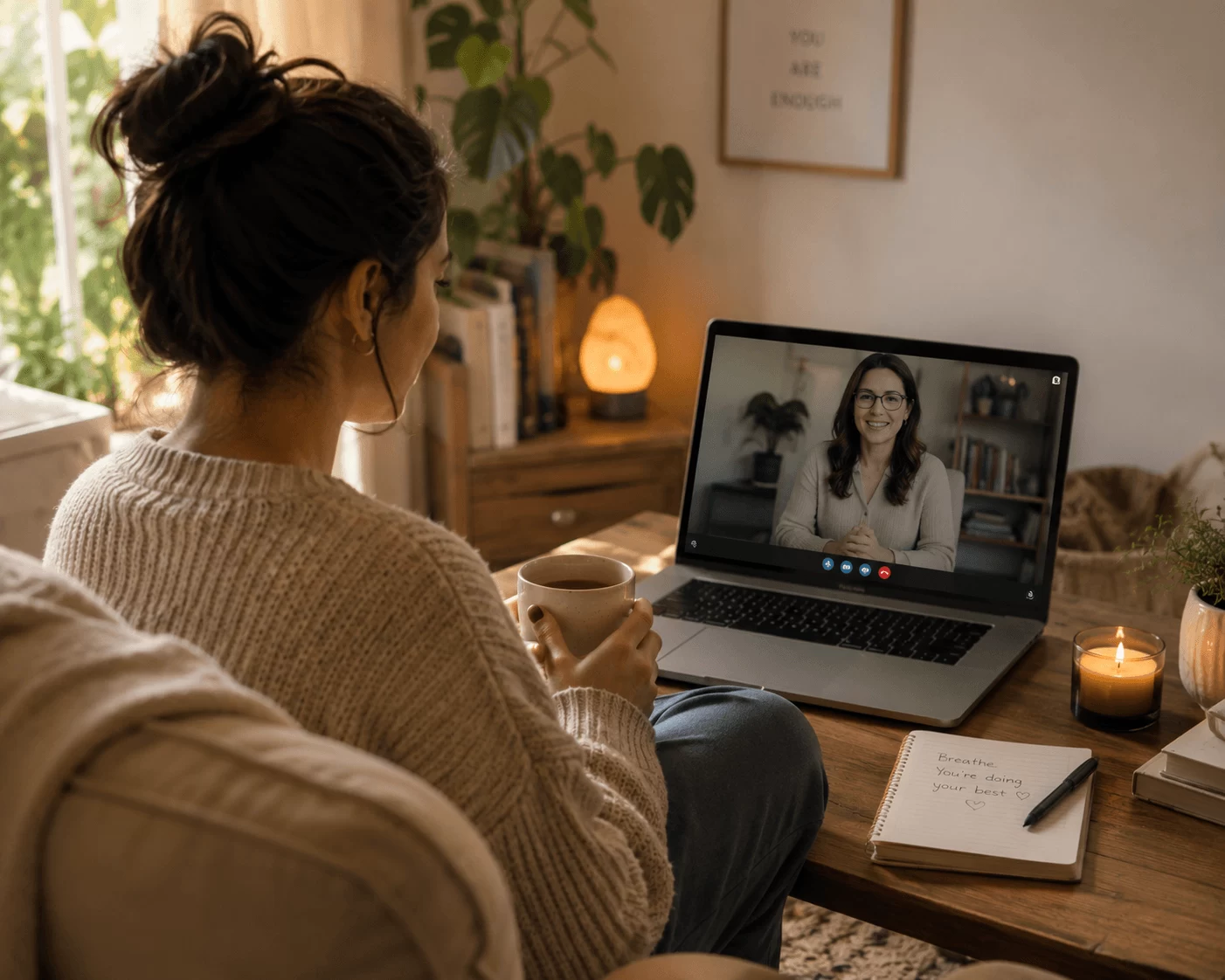
If anxiety has been running the show for a while, even booking counselling can become something to overthink.
You might wonder what you should say first. Whether your story is serious enough. Whether you will cry. Whether you will go blank. Whether the counsellor will understand the thing you have barely managed to explain to yourself.
The first session does not need you to arrive organised. You can begin with the most ordinary sentence: I do not really know where to start. That is enough. Christina will help you slow the story down and find the thread underneath it.
Some people talk quickly in the first session because the anxiety has been holding too much for too long. Some people speak in fragments. Some need silence before anything clear comes. There is no correct version.
“Christina helped me understand the underlying issues which kept me stuck.”
This is often where relief begins. Not because the anxiety disappears in an hour, but because it starts to become understandable. The symptom stops being the whole story.
Going deeper than symptom control
There is nothing wrong with tools.
Breathing, grounding, thought work, body awareness, and practical nervous-system support can all help. They are useful when anxiety has become so loud that you need something steady to return to. But tools alone may not reach the reason your system keeps bracing.
Christina’s work looks at the root as well as the symptom. What is the anxiety protecting? What does your body think will happen if it lets go? Where did you learn to scan the room, anticipate other people’s moods, or stay ready for disappointment?
For some people, the root is obvious once they say it aloud. For others, it is hidden underneath years of functioning. This is where Christina’s clinical training and intuitive insight can work together. The counselling gives the work structure and safety. The intuitive layer can help name patterns that ordinary conversation may take much longer to reach.
“I was able to see core issues that I was not able to recognise before.”
If the word intuitive makes you cautious, that is allowed. You do not have to believe anything in advance. The work stays grounded. You can bring scepticism, questions, and your own pace. The purpose is not to impress you. It is to help you recognise what has been driving the anxiety from underneath.

The shift is usually quiet
People often expect change to feel dramatic.
Sometimes it is. More often, the first shift is almost plain. You sleep a little better. You answer a message without rehearsing it ten times. You notice the tightness in your chest before it becomes panic. You pause instead of spiralling. You let one small thing remain unfinished and the world does not fall apart.
This is healing in a practical sense. The body learns, slowly, that it has more choices than fight, flight, freeze, or pleasing everyone before they ask.
“This morning I feel so much lighter and clear.”
A shift does not mean you never feel anxious again. It means anxiety is no longer the only voice in the room. You can feel the wave and still have some part of you stay present. You can notice the old pattern and choose one different response.
Those small differences matter. They gather.

Life gets wider again
Anxiety makes life smaller by pretending it is keeping you safe.
You stop going to things. You delay conversations. You avoid decisions. You keep your world predictable, then wonder why you feel trapped inside it. At first, the shrinking can feel responsible. After a while, it starts to cost too much.
The work of anxiety counselling is not to push you into a bigger life before your body feels ready. It is to help your system build enough safety that your life can open again without feeling like a threat.
That might mean being able to rest without guilt. Asking for what you need. Driving somewhere you have avoided. Letting someone be disappointed without immediately fixing it. Speaking more truth in a relationship. Returning to parts of yourself that anxiety had quietly fenced off.
“For the first time in a long time I am finally thriving again.”
There is no promise that life becomes easy. That would not be honest. But it can become less ruled by the alarm in your body. Less narrowed by what might happen. More available to what is actually here.

When anxiety argues against getting support
Anxiety will often have an opinion about booking a session.
It may tell you to wait until you are clearer. Until you have more money. Until the week is calmer. Until you can explain it better. Until you are sure Christina is the right fit. Some of those concerns may be practical and worth listening to. Some are anxiety using intelligence as a hiding place.
This is why the first step is deliberately small. A free 15-minute assessment is not a full commitment. It is a short conversation where you can ask questions, feel Christina’s manner, and decide whether the work feels right.
If you want to read more first, the anxiety counselling page explains the service itself. The individual counselling page shows how Christina works with people one to one, and the reviews and testimonials page holds more client experiences.
Start with fifteen minutes
If your body has been living on high alert, you do not have to arrive calm to ask for help. Bring the overthinking, the uncertainty, the tiredness, or the part of you that is not sure this will work. The first conversation can be small.
A free 15-minute assessment gives you a chance to meet Christina and sense whether this feels like the right room for the deeper work.
Book the free 15-minute assessment
A few quick questions
Can counselling help if I have had anxiety for years?
Yes, long-term anxiety can still shift. The work may need to be slower and more layered, especially if anxiety is connected to trauma, responsibility, grief, or old survival patterns. You do not have to know the cause before beginning.
Do I need a diagnosis to book anxiety counselling?
No. You can book because anxiety is affecting your life, sleep, relationships, decisions, or body. A formal diagnosis is not required to begin counselling with Christina.
What if I feel anxious about the first session?
That is very common. The first session is not an exam and you do not need to explain everything perfectly. You can begin with what is most present, even if that is simply feeling nervous about being there.