What Is Complex Trauma (C-PTSD)?
Last updated:
Trauma & Healing
Some people read about PTSD and feel that it almost fits, but not quite. The single dramatic event does not match their story, yet something in the description rings true. If that is you, there may be a reason it does not quite land.
Complex trauma, sometimes called C-PTSD, describes what can happen after harm that was repeated or prolonged, often over years. In this post I want to offer a clear, gentle explanation of what complex trauma is, how it differs from PTSD, the quiet ways it shows up in adult life, why it can surface long after the events, and why recovery is genuinely possible.
An estimated 75% of Australians experience a traumatic event in their lifetime; repeated or prolonged trauma carries a higher risk of lasting effects such as PTSD (around 11%).
Sources: ABS National Study of Mental Health and Wellbeing, 2020 to 2022; AIHW.What complex trauma is
Complex trauma grows out of repeated or ongoing experiences, rather than a single defining event. It is the accumulation of many smaller wounds, or the long shadow of one situation that went on and on.
It often begins in circumstances a person could not easily escape, frequently early in life or within important relationships. A child cannot leave their family. A partner may feel trapped for years. Because it was not one moment but a pattern, complex trauma shapes how a person comes to see themselves, other people and the world around them. It becomes woven into the everyday sense of who you are.
How it differs from PTSD
PTSD is usually linked to a specific traumatic event. A car accident, an assault, a natural disaster, something with a clear before and after. The mind keeps returning to that moment.
Complex trauma comes from the accumulation of many experiences, and so it tends to affect more than memory. It reaches into self-worth, the ability to regulate emotion, and the way relationships are formed and held. This is why ordinary approaches that focus only on a single incident can sometimes miss part of the picture. The injury is broader, and so the care needs to be too.
How it shows up in adult life
Complex trauma is often not obvious, even to the person living with it. There may be no clear flashback or single memory to point at. Instead it tends to live in patterns.
It can look like harsh self-criticism, a quiet certainty that you are not quite good enough. It can show up as difficulty trusting, feeling far too much one moment and strangely numb the next, or a constant low-level bracing for things to go wrong. It can also appear in relationships that keep following the same painful shape, no matter how much you wish they would not.
Many people assume this is simply who they are. They call themselves anxious, or difficult, or too sensitive. It can be a relief to learn that these are not character flaws but understandable responses to what was lived through.
 Five-star Google reviews
What clients say about working with Christina
“I was able to see core issues that I was not able to recognise before.”
Why it surfaces years later
It is very common for complex trauma to make itself known long after the original events. Someone copes well for years, builds a life, holds things together, and then something shifts.
A new relationship, a loss, becoming a parent, or simply a quieter season can bring it to the surface. This is not going backwards or falling apart. Very often it is the opposite. It is the moment something finally feels safe enough to be felt. The nervous system held the line as long as it had to, and now it can begin to let go.
The nervous system remembers
Complex trauma is not only stored as thoughts or memories. It is held in the body and the nervous system, in the automatic ways we react before we have time to think.
When the early environment was unpredictable or unsafe, the body learns to stay ready. It scans for danger, tenses against criticism, and prepares to protect itself. These are survival responses, and they once made complete sense. Understanding the fight, flight, freeze and fawn responses can help make sense of reactions that have felt confusing or out of your control for a long time.
How it touches relationships
Because complex trauma so often begins within relationships, it tends to echo most loudly there. The very place that caused the hurt is the place we keep needing to return to, because human beings are built for connection.
This can mean longing for closeness while also fearing it, pulling people near and then pushing them away, or reading rejection into small moments. None of this means you are broken or incapable of love. It means a younger part of you learned to protect itself, and that part has not yet been told that things are different now.
Five-star Google reviewsHow clients describe the change
“I truly felt heard for the first time in all my life and deeply understood.”
It is not your fault, and it is not who you are
One of the cruellest features of complex trauma is how easily it convinces a person that they are the problem. The shame turns inward, and the original harm becomes invisible underneath it.
I want to say this plainly. What happened to you was not your fault, and the ways you adapted to survive are not flaws. They are evidence of how hard you worked to stay safe. Separating who you are from what happened to you is often one of the first and most freeing parts of the work.
Healing is genuinely possible
This is the part that matters most. The nervous system that learned to brace can also learn that it is safe now. The body that adapted to threat can adapt again to calm.
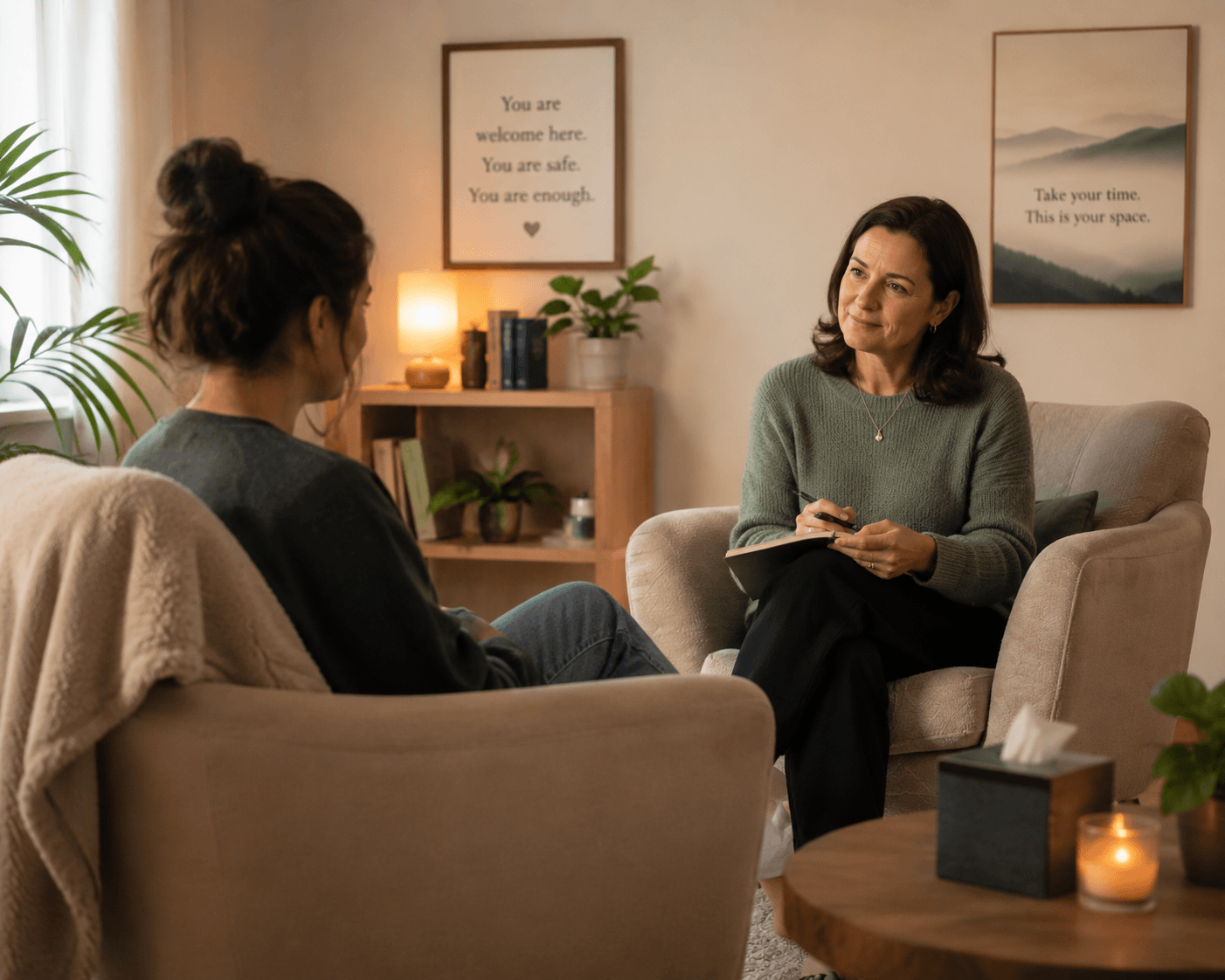
With paced, careful work, the grip of the past can loosen. A different way of relating to yourself and to others can slowly grow, one small experience of safety at a time. Recovery does not erase your history. What it changes is how much that history runs your present, and how free you feel to live the life in front of you.
What good support looks like
With complex trauma, safety and pace are everything. The work should never be rushed or forced, and it should never ask you to prove your pain before you are ready.
Good support moves at a speed you can manage. It builds enough steadiness and trust first, so that going deeper does not overwhelm you. You stay in control of how far and how fast you go at every step. My approach blends training in psychology, social work and human services with a warm, intuitive way of listening, so the work feels both grounded and gentle.
If any of this sounds familiar, the trauma counselling page explains how I work, gently and at your pace. You may also like to read a little about me first, so the first conversation feels less like meeting a stranger.
Taking a small first step
You do not have to be sure. You do not have to have the right words, or a tidy version of your story. Curiosity is enough to begin with.
Often the first step is simply allowing yourself to wonder whether things could be different. Many people carry complex trauma for a very long time before they realise that support exists and that it can help. If you have read this far, some part of you is already reaching toward something gentler. That counts.
Five-star Google reviewsWhat clients experience after trauma support with Christina
“Christina helped me understand the underlying issues which kept me stuck.”
Start gently, in your own time
There is no pressure to tell your story before you are ready. The free 15-minute assessment is simply a way to ask questions, hear how I work, and see whether this feels safe enough to begin. There is nothing to lose by reaching out.
You can also read the wall of Google reviews from people across Australia and beyond.
Book the free 15-minute assessment →
A few quick questions
Is complex trauma an official diagnosis?
Complex PTSD is recognised internationally, including in the World Health Organization’s ICD-11. A formal diagnosis is a matter for a GP or psychologist. Counselling does not diagnose; it works with how complex trauma affects your daily life and relationships.
How is it different from PTSD?
PTSD usually follows a single event, while complex trauma follows repeated or prolonged experiences. Complex trauma tends to affect self-worth, emotional regulation and relationships, not just memory of one moment.
Can complex trauma be healed?
It can genuinely improve. With safe, paced support, the nervous system can settle and old patterns can loosen their hold over time. Recovery does not erase the past, but it changes how much it shapes your present.
Will I have to relive everything in counselling?
No. Good trauma work does not force you to relive anything. It is paced carefully, and you stay in control of what you explore and when. Safety comes first, always.
When should I see a doctor instead?
If you are in crisis or thinking about harming yourself, please contact your GP, or call 000 in an emergency. Counselling works best alongside that kind of immediate care, not in place of it.