Grief and Loss Counselling
Last updated:
Soul Counselling – Grief and Loss Counselling
Grief and loss counselling, online across Australia.
Gentle, unhurried support for the loss that changed everything. Christina Feyes offers online grief and loss counselling Australia-wide, in sessions long enough to let grief be felt, not managed.
Book a free 15-minute assessment Contact ChristinaIf you are here, grief might feel like this.
- A loss that still feels raw, even when time has passed and others have moved on.
- Waves of sadness, numbness, anger, relief or guilt that arrive without warning.
- A quiet pressure to be “over it” by now, when inside you are nowhere near.
- Carrying it mostly alone, because you do not want to burden the people around you.
- Grief that is not about a death at all: a separation, a diagnosis, a move, a life that changed shape.
- Wanting somewhere safe to put what you are feeling, without being rushed or fixed.
Most grief softens over time with support and connection. Yet research suggests around 1 in 10 bereaved people experience prolonged grief that stays intense and disabling, and benefits from professional support.
Source: Australian Centre for Grief and Bereavement (Grief Australia).What this is
What is grief and loss counselling?
Grief and loss counselling is a supportive, talk-based relationship with a counsellor who makes room for your loss exactly as it is. It is not about reaching a tidy ending or “letting go”. It is about being met in what happened, understanding the grief you are carrying, and slowly finding a way to keep living that honours the person, relationship or life you lost.
With Christina, that happens in an unhurried session of 90 to 105 minutes, most often held online. There is time to settle in, to follow the feeling wherever it goes, and to not be cut short by the clock. Many people find that longer sessions mean fewer of them, because the work can reach the heart of things rather than skim the surface.
Grief is not only about death.
People come to grief counselling for every kind of significant loss: the end of a marriage or relationship, a serious diagnosis, the loss of a pregnancy or a baby, estrangement from family, the loss of a home, a career or an identity, and the slow, anticipatory grief of watching someone you love decline. If something important to you has gone or is going, your grief is real, and it is welcome here.
And there is no “right” way to grieve.
The old idea of five neat stages, moving in order from denial to acceptance, was never meant as a map for how you should feel. Real grief is not linear. It loops, it surprises you, it goes quiet and then returns on an anniversary or an ordinary Tuesday. Part of the work is simply trusting that your grief, however it shows up, makes sense.
Kinds of loss
The losses Christina sits with.
Grief is personal, but these are common reasons people reach out. Each is held with the same care.
Death and bereavement
Support after losing someone significant, whether recently or long ago, including loss that still feels unfinished. Read more
Loss of a partner or parent
The particular grief of losing a spouse, a parent, or the person who anchored your daily life and your sense of home.
Pregnancy and baby loss
Miscarriage, stillbirth and infant loss, held gently, including the grief that others may not see or name.
Separation and divorce
Grieving a relationship, a shared future, and the version of life you thought you were building. Read more
Anticipatory grief
The grief that begins before a loss has fully happened, while caring for someone who is unwell or declining.
Identity and life change
Loss of health, work, fertility, faith or a sense of who you were, and the disenfranchised grief few people acknowledge.
How Christina works
A space where grief does not have to be rushed.
Grief is not a problem to solve. It needs space, witness and safety. Christina helps you hold what happened without forcing you to move faster than your heart can go.
Gentle witnessing
A calm, judgement-free space where the loss can be spoken aloud without being minimised, managed or hurried along.
Complicated grief
Steady support for the harder layers: guilt, anger, numbness, relief, shock, regret and the conversations you never got to finish.
Meaning and reconnection
Help finding a way to keep living, and to carry the love forward, without pretending the loss did not matter.
What it can feel like
From first contact to finding your feet again.
Everyone’s grief moves differently. This is the shape the work often takes.
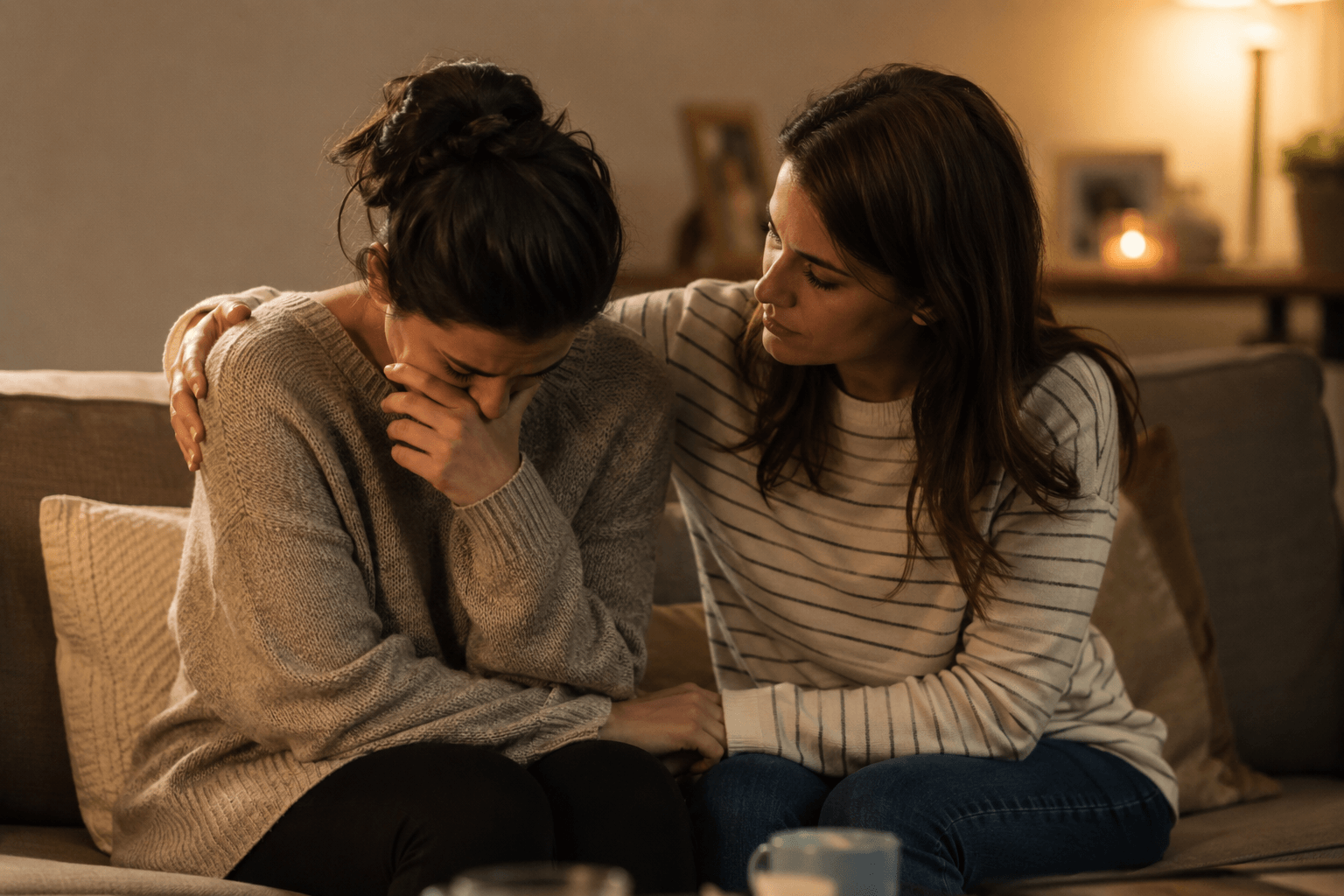
You do not have to explain it perfectly.
Most people reach out unsure of what to say, or whether their grief “counts”. It does. The first step is simply a free 15-minute call, with no pressure to commit and nothing you need to prepare.
“My session with Cristina was a gift of reassurance, of clarity. I am forever grateful.”– Joanne, Brisbane
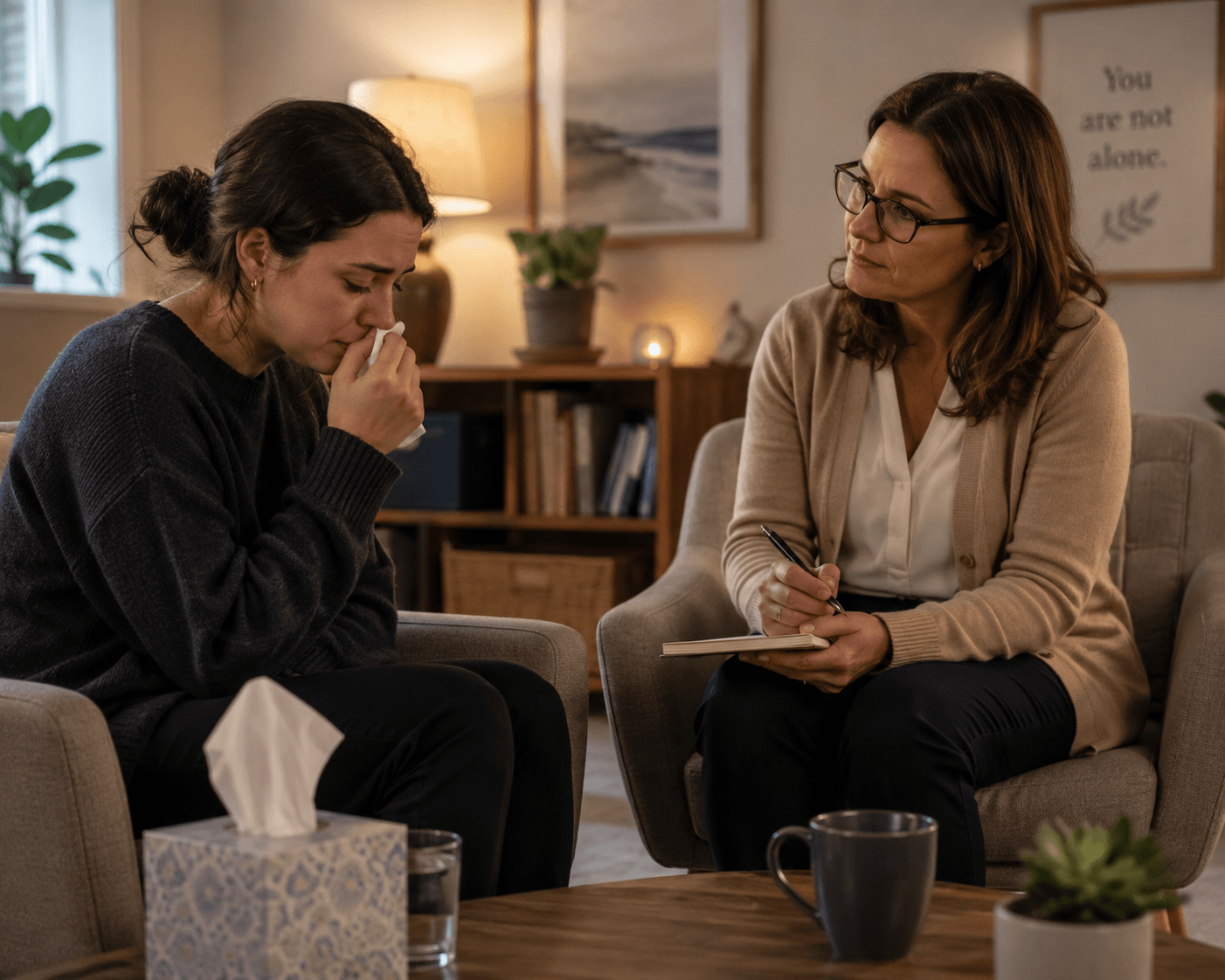
Somewhere safe to set it down.
In your first full session there is no script and no rush. You share only as much as you want to. For many people, just being heard, fully and without judgement, is where the relief begins.
“My session was so healing. This morning I feel so much lighter and clear.”– D.
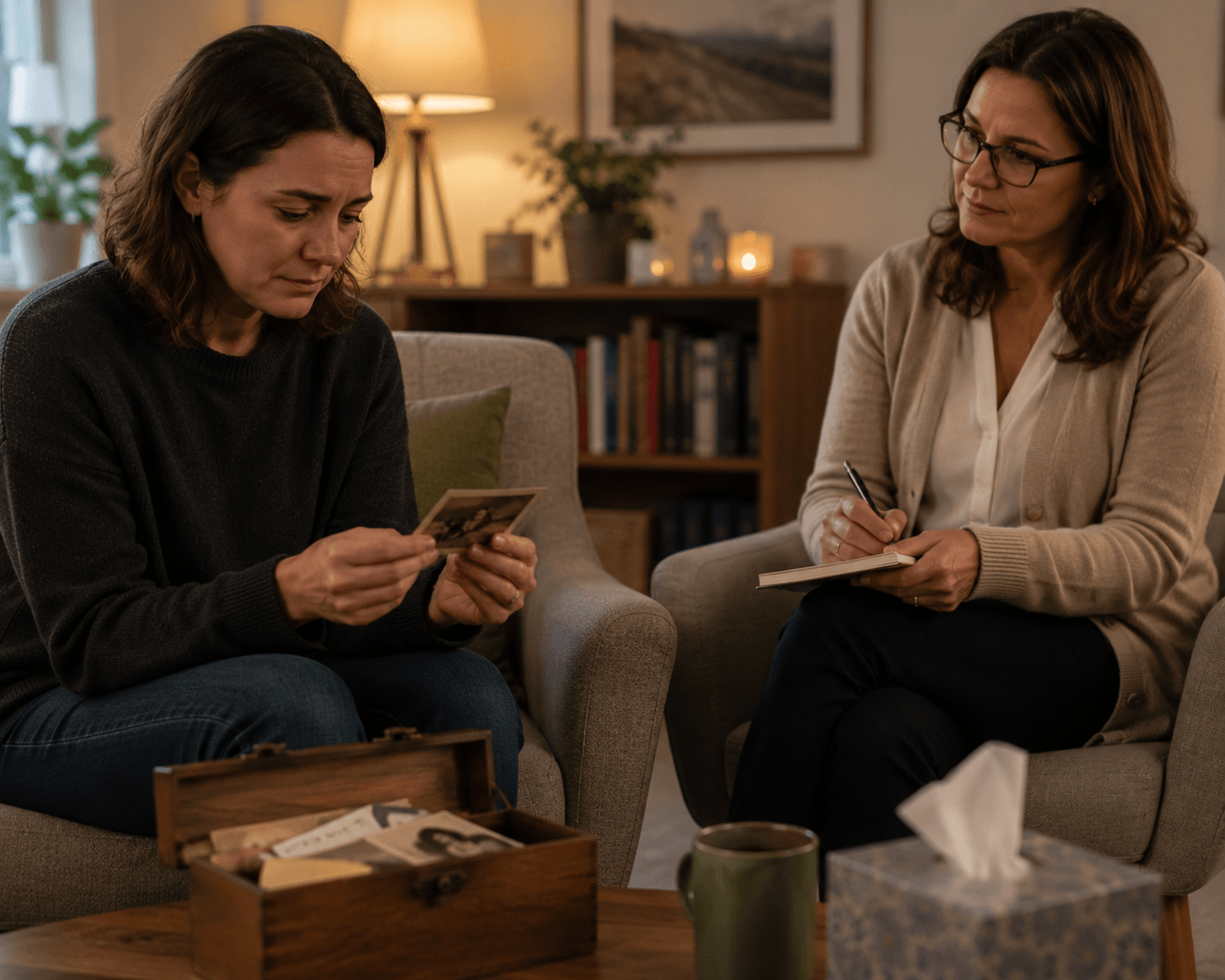
The harder feelings get room too.
Grief rarely arrives alone. Guilt, anger, relief and old wounds can surface alongside it. With time and safety, these are gently met, so they have less grip on the present.
“It felt so transformational, unlocking buried trauma and releasing it safely. I have never felt so heard.”– Annouska

Something eases.
The loss does not disappear, but its weight changes. People often describe feeling lighter, clearer and more at peace, able to remember without being pulled under.
“You have helped blow away the dark clouds and thunderstorms, and brought back sunshine into my life.”– Emma

Carrying the love forward.
The aim is not to “get over” your loss, but to find a truer way to live with it. To keep the connection, honour what mattered, and slowly step back into your life.
“I feel lighter and more at peace after the sessions with her.”– Georgia
How telehealth works
How online grief counselling works.
Most people meet Christina online by secure video, so you can grieve from somewhere that already feels safe: your own home, your own chair, a cup of tea beside you. Online, there is no waiting room, no travel, and no need to compose yourself for the drive home afterwards. If you live on or near the Gold Coast, up to Tamborine Mountain, and would rather bring your photos and memories to a session in person, Christina can plan one ahead once a suitable space is free.
Because Christina works Australia-wide, where you live does not limit who you can see. People connect from across the country, from the Gold Coast and Brisbane to Sydney, Melbourne, Perth, regional and remote towns. You do not need a referral or a mental health care plan to begin. You simply book a time that suits you.
Wondering whether online grief counselling really works? Many people are surprised by how connected and held a video session can feel, often more so than they expected, because the focus stays entirely on you and your loss.

Who you would be working with
Christina Feyes, counsellor.
Christina founded Soul Counselling in 2016 and has supported people through loss for many years. A counsellor with training in psychology, social work and human services, she brings a grounded, deeply human presence to grief, with an intuitive sensitivity for the loss sitting beneath the surface.
She is also the author of Realizing Death, a calm, reflective companion for anyone navigating loss and the deeper questions grief can bring. It is there if and when you want it, and never required reading.
People often describe feeling genuinely heard for the first time, and finding a clarity and lightness they had stopped expecting. More about Christina or read client reviews.
Start here
A free 15-minute counselling assessment.
A no-pressure call so you can meet Christina, ask anything, and decide whether the work feels right for you. No commitment. No pre-screening. Just a conversation. There is nothing to lose.
Common questions
Grief and loss counselling, answered.
What is grief and loss counselling?
It is a supportive, talk-based relationship with a counsellor who helps you make sense of a significant loss and find a way to live alongside it. It is not about forgetting or “moving on”, but about being met in your grief and slowly feeling steadier.
How does online grief counselling work?
Sessions are held by secure video, so you can take them from home anywhere in Australia. You do not need a referral. You book a free 15-minute call first, then ongoing 90 to 105-minute sessions if it feels right.
What happens in my first grief counselling session?
There is no script and no pressure. You share only what you want to, at your own pace. Christina listens, gently follows what matters most to you, and helps you feel safe. Many people leave their first session feeling lighter simply for being heard.
How do I know when it is time to see a grief counsellor?
There is no threshold you have to reach. If your grief feels stuck, isolating or overwhelming, if it is affecting sleep, work or relationships, or if you simply want somewhere to put it, that is reason enough to reach out.
How long does grief usually last?
There is no set timeline, and anyone who gives you one is guessing. Grief tends to change shape rather than end. It softens, returns on anniversaries, and gradually takes up a different kind of space in your life.
What is the difference between normal grief and complicated grief?
Most grief, however painful, slowly eases with time and support. Complicated or prolonged grief stays intensely disabling for a long time and can keep someone stuck. Counselling can help with both, and gently support you if your grief feels frozen.
Can grief counselling help with losses that are not a death?
Yes. Separation and divorce, pregnancy loss, estrangement, a difficult diagnosis, the loss of a job, a home or an identity, and anticipatory grief are all welcome here. If a loss matters to you, it matters here.
How much does grief counselling cost?
The best place to start is the free 15-minute assessment, so you can get a feel for the work before deciding anything. There is nothing to lose, and no pressure to continue.
What is the difference between a grief counsellor and a psychologist?
Christina is a counsellor, not a registered psychologist. A counsellor offers an unhurried, person-centred relationship focused on support and understanding. If you specifically need a Medicare rebate or a formal diagnosis, a GP or psychologist may suit better. If you want warm, in-depth support for your grief, counselling may be the right fit.
I am not sure I am ready. What is the smallest first step?
The free 15-minute call. You do not have to commit to anything, explain everything, or be “ready”. You can simply see how it feels to talk, and stop there if you want to.
From the blog
Further reading on grief and loss.
Gentle, honest writing on specific kinds of loss, for whenever you want to read more.
When you lose a pet
Grief for an animal you loved is real, even when the world treats it as small.
Read moreGrief after losing a parent
When the ground shifts, even as an adult, and even when it was expected.
Read moreAnticipatory grief
Mourning someone who is still here, through an illness or a slow decline.
Read moreGrief after losing a partner
The particular grief of losing the person who was your whole life.
Read moreYour grief deserves somewhere safe to land.
You do not have to carry this alone, or have the right words. Start with a free, no-pressure conversation and see if working with Christina feels right.
Book a free 15-minute assessment